Ask any Latin student why they study a “dead language,” and you’ll hear the same defenses rehearsed again and again. “Intellectual rigor”, “cultural richness”, and “the foundation of Western society.” You roll your eyes. These answers are true, but they’re rather incomplete. What if I told you Latin doesn’t become fully alive in the classroom, or even in the pages of Vergil and Caesar? It comes alive when you least expect it in modern, daily life.
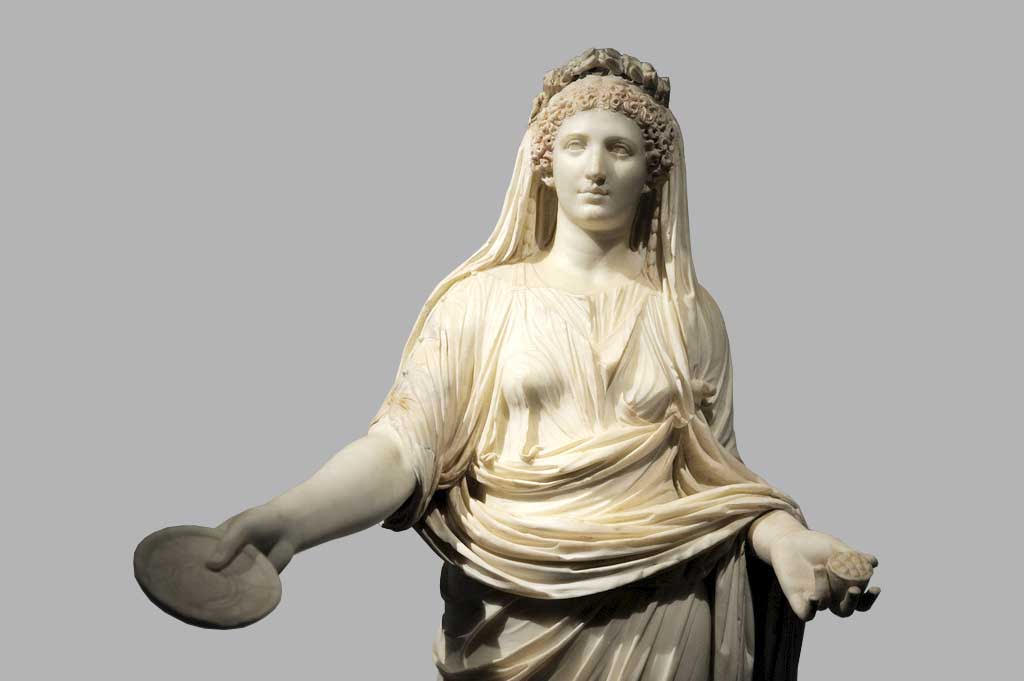
For some, that can take the form of science. Open a research paper on immuno-oncology, and anyone’s first instinct is to brace for confusion. The page is riddled with complex terms, and for a moment, it feels like being dropped into a foreign country, where every sentence is a street you don’t recognize. But squint through the haze, and someone familiar appears. Her sinuous silhouette, her soft voice. It is Latin, our old friend. She is here to be a tour guide—just donning a lab coat instead of a toga.
She trickles through dense paragraphs, leaving a clear path in her wake, the way streams of water can dissolve structured rock. She leaks through the page, illuminating small patches of light in otherwise murky territory. She is inarguably alive.
With her guidance, readers can proceed one word at a time, just as she trained her students to translate The Aeneid and the Gallic Wars. Start by breaking words apart. “Ligand,” the surface proteins that connect cells and send signals, becomes ligare, to bind. “Malignant” splits into mal, bad, and gignere, to give birth. So, really, malignant cells are not just dangerous; they are literally born wrong. The word “immunity” itself comes from the Latin words im, not, and munus, duty or service. So, a functioning immune system is exempt from the duty of fighting disease.
When readers learn that cancer cells can survive and spread by mimicking that exemption, it is hard not to imagine them sneering through deceitful grins at T cells. Suddenly, each of these words has a story beyond just a definition. That’s the magical work of Latin.
In a sense, Latin never died. Her ghost is alive in many modern languages, including the language of science. But only to those who choose to see her.