
In light of wars in the Middle East and political conflicts, Muslim communities have been consistently targeted with racism and hate crimes. Many people feel a need of self censorship or conceal their identities because of how their communities are portrayed in the media.
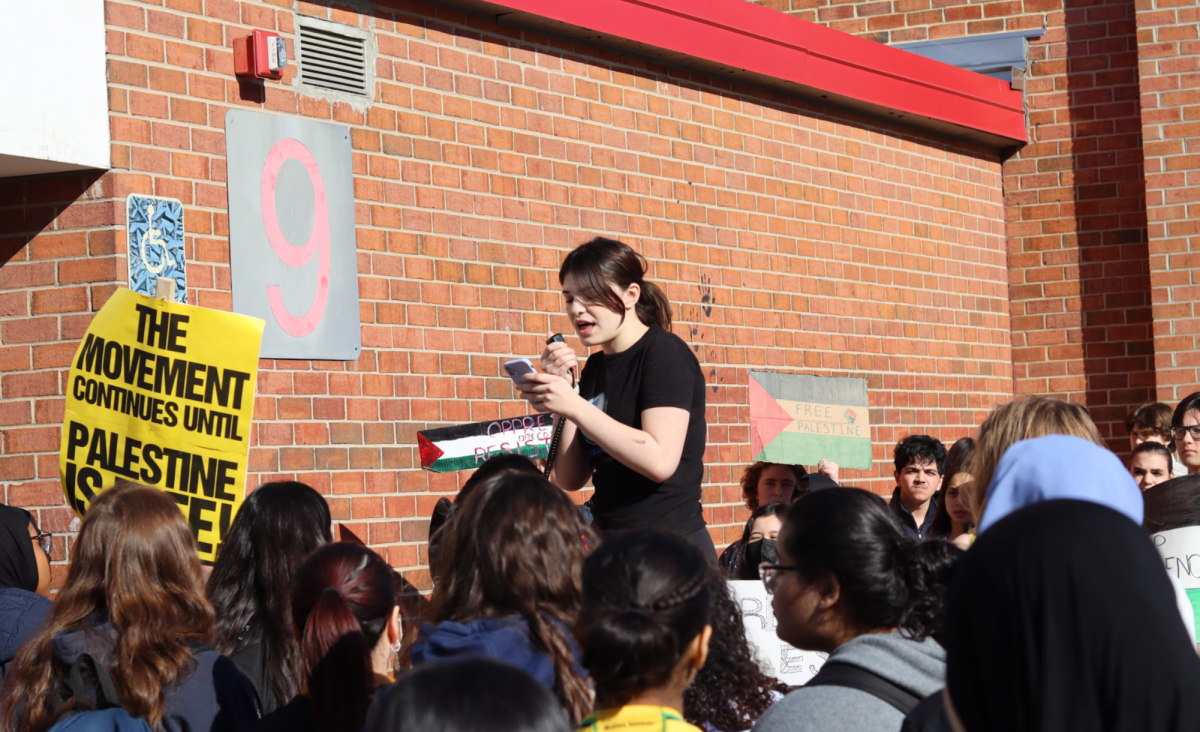
Since events like the 9/11 terrorist attacks to the Oct. 7 invasion and subsequent genocide Gaza, discrimination against Muslims have been increasing.
“I feel like before 9/11, things were starting to look brighter for the Muslims. People were accepting of Muslims, Muslims were becoming politicians, getting [involved] into the government,” said Marwa*, a parent of a student in FCPS. “Then 9/11 happened, and everybody clammed up out of fear, and that started lifting up until Oct. 7. I want the Muslim community to survive and thrive, [yet], this fear is stunning the growth of the community.”
Number of Muslims who experienced hate crimes in 2024 (information obtained by Statistica).
During the 9/11 terrorist attacks, when four planes hijacked by the terrorist organization Al-Qaeda struck the World Trade Center in New York and the Pentagon in Washington, D.C., Muslims felt an immense amount of fear when doing day-to-day activities.
“When I was in high school during [the days after] 9/11, I wore a hijab and this guy came up to me and put his hands like they were two guns and was like ‘Oh, that’s why you wear a scarf. You’re hiding your guns.’ It was a very hateful, bold thing to do.” Marwa said. “My grandpa was working in the State Department on 9/11, so he used to work in the Pentagon and his section was [destroyed] from the fallen plane. My uncle was a victim at the Twin Towers. So I was affected too but yet I was the perpetrator.”
Muslims became targeted with jokes and hateful rhetoric that became normalized.
“There was no trust in Muslims,” Marwa said. “Muslims became the butt of the jokes, they became the terrorists, they became the evil, ugly looking ones. It was completely unnecessary.”
In current times, with the Middle East constantly appearing in the news for wars and conflicts, the rise in discrimination towards Muslims in FCPS has risen again.
At Thomas Jefferson High School for Science and Technology (TJHSST), cases of islamophobia and anti-Palestine hate towards students have occurred, often due to clothing.
“I was walking in the hallways, going to the bathroom, and then [a teacher] stopped me and she told me that I need to either change my shirt or cover it up because there’s a weapon in the bag. So I listened to her and I did not argue,” Fatima* said. “She forced me to put on my jacket and she walked me back to class. But I looked at the shirt again, and I was pretty sure there was no weapon. It said ‘Grant Theft Palestine’, so I think that’s what caught her attention.”
Last November, TJHSST and Langley Muslim Student Associations (MSA) faced significant controversy after the clubs posted a video promoting upcoming events. [insert link to that article].
“Since the big issue that [incident] caused, it really worries my mom and she doesn’t really let me wear any more Palestine themed stuff. I honestly sometimes still do, but my mom doesn’t want me to because we’re trying to avoid any more issues,” said Fatima, who was also involved in this situation. “I want to be more upfront, because I am proud of my culture, but then there’s the fear that we’re going to get ourselves into trouble.”
Recently, FCPS’s administration has stepped up to remove Eid, a biannual religious holiday celebrated by Muslims, from the calendar.
“[The holiday was deemed as] disruptive because it’s midweek, and it changes every year, so they feel like it’s unnecessary, even though it’s just two days,” Marwa said. “I understand they want to keep the five-day week model, which is a good thing, I’m all for that, but making a big problem for just two days of the year is really unnecessary. [Muslims] deserve their holiday recognized.”
On a national level, the Trump administration has also brought an uneasy feeling for Muslims living in America.
“I [moved to America] in 1987, and it was very welcoming, it was very nice, very good experience,” Safa* said. “But till the Trump administration’s [first-term], we started feeling a difference. I was scared to take my kids to the park, to be alone with my kids anywhere. I started seeing hate in people’s eyes. If I make a mistake, lets say I did not put my blinker on to the right or left, I would get honked at and told ‘go back to your country.’”
Despite all of this stigma surrounding Muslims, the community stays faithful in remaining a strong, collective group.
“I wish that things were different and it would be easier for everybody to just be safe in a better environment, but it is what it is,” Marwa said. “I think that pressure creates diamonds, so what we’re creating right now, regardless of this pressure, is an amazing youth.”