On May 29, Olive Young, South Korea’s leading beauty retailer, opened its first official U.S. store in Los Angeles. Marking the official start of the supply chain’s presence in America, Olive Young has a promising future for its dominance in the U.S. beauty industry with the rise of K-beauty.
Statistically speaking, Olive Young has the potential to challenge the dominance of America’s two largest beauty retailers—Sephora and Ulta Beauty. With K-beauty products generating an estimated $2.4 billion in U.S. sales last year alone, consumer demand is clearly on the rise.
Yet despite these promising numbers, Olive Young cannot rely solely on the growing popularity of K-beauty. To truly establish itself as a dominant force in the American beauty market, the company must learn to meet the diverse needs and expectations of U.S. consumers—including its large Asian American customer base—while introducing them to what makes K-beauty unique.
One of the biggest differences between K-beauty and the broader American beauty market lies in the products themselves. From lip products and foundations to blushes, each category reflects distinct consumer preferences and reveals the different trends that American and Korean companies prioritize. For example, popular Generation-Z staple lip products in the U.S. include Summer Fridays, Fenty Beauty and Rhode, all of which gravitate towards a glossy, fuller-lip look. In South Korea, however, Rom&nd and Peripera are dominant among teenagers and young adults with their lip gloss products leaving a soft, gradient-looking finish.
These lip products are just one of many examples of how beauty standards, consumer preferences and purchasing habits vary between the two markets, and why Olive Young cannot assume what succeeds in South Korea will automatically resonate with American shoppers.
Just as Sephora struggled to gain a foothold in the Korean market, Olive Young can risk its own growth if it fails to understand what American consumers value and how those preferences shape purchasing decisions.
Going forward, the mindset to outdo Sephora and Ulta Beauty is not the right direction or motto for Olive Young. Even worse, Olive Young shouldn’t neglect the products and trends that made it successful in South Korea. In fact, Olive Young’s current limited product selection in the U.S. could hinder the brand’s future growth and weaken its customer base, potentially causing it to lose Asian American consumers already familiar with the brand. To truly win the best of both worlds, Olive Young should address what American beauty brands lack while preserving the qualities that set K-beauty apart.
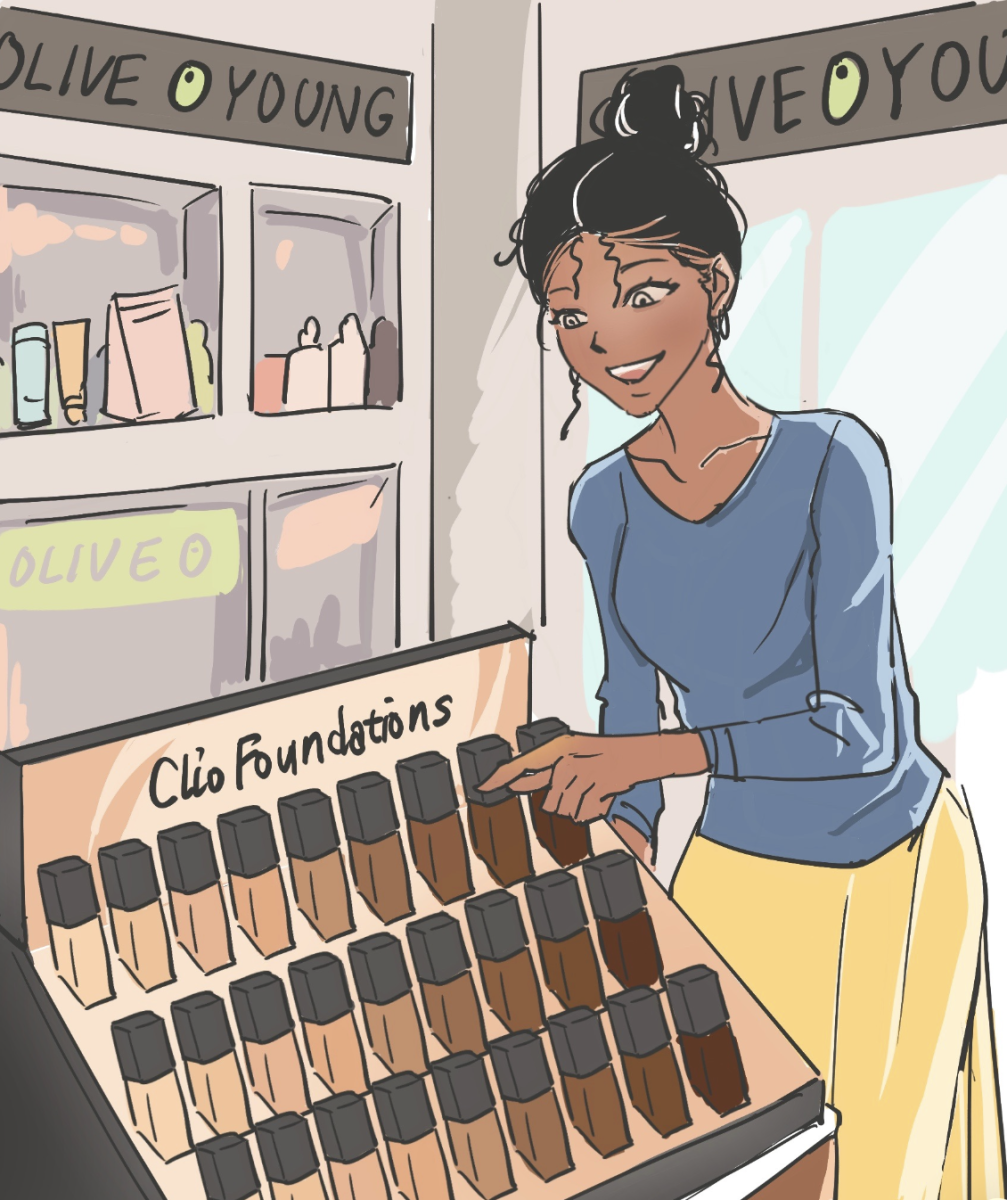
Foundation ranges, for example, remain a common concern among American consumers and are a central critique for American beauty brands. Korean brands such as Clio have already demonstrated that adapting products to serve a wider range of skin tones can generate success in American markets. By catering to the diverse needs of Black, Latina, white and Asian American customers, Clio quickly gained popularity among American shoppers. Following this as a blueprint, Olive Young should attract American consumers by marketing K-beauty innovations that are more desirable to a larger consumer base.
By addressing unmet consumer needs while maintaining the skincare-focused formulas, ingredient transparency and product innovation that define K-beauty, Olive Young can distinguish its products from its competitors rather than blending into an already crowded industry.
Following this, it will allow K-beauty’s already successful reputation to see a higher success rate in American markets. Providing solutions to consumer demands can also increase interest among Asian Americans, who often face limited options in the mainstream American beauty market.
“Even though I’m not too familiar with K-beauty, I’ve struggled with finding the right lash clusters or eyelash curler that fits my eyeshape,” senior Divya Isukapalli said. “I would be really interested in finding what’s right for me through Olive Young, especially if they provide products different from Sephora, which is where I usually shop.”
Just as Olive Young strategically chose Los Angeles for its first U.S. location, a city that holds the highest Korean population in America, expanding into other areas with strong Asian American communities—such as New York City, San Francisco and even the Washington D.C., Maryland and Virginia (DMV) area—with strategic product supplying could help build a loyal customer base among Asian before gradually expanding its appeal to non-Asian customers as K-beauty becomes increasingly mainstream. As interest in K-Beauty continues to grow, a gradual, strategic approach can help even McLean students become increasingly familiar with Korean beauty brands and trends.
The key to Olive Young’s success will not be convincing Americans to abandon their beauty preferences. It will be showing customers how K-beauty can solve problems that existing retailers have yet to address.