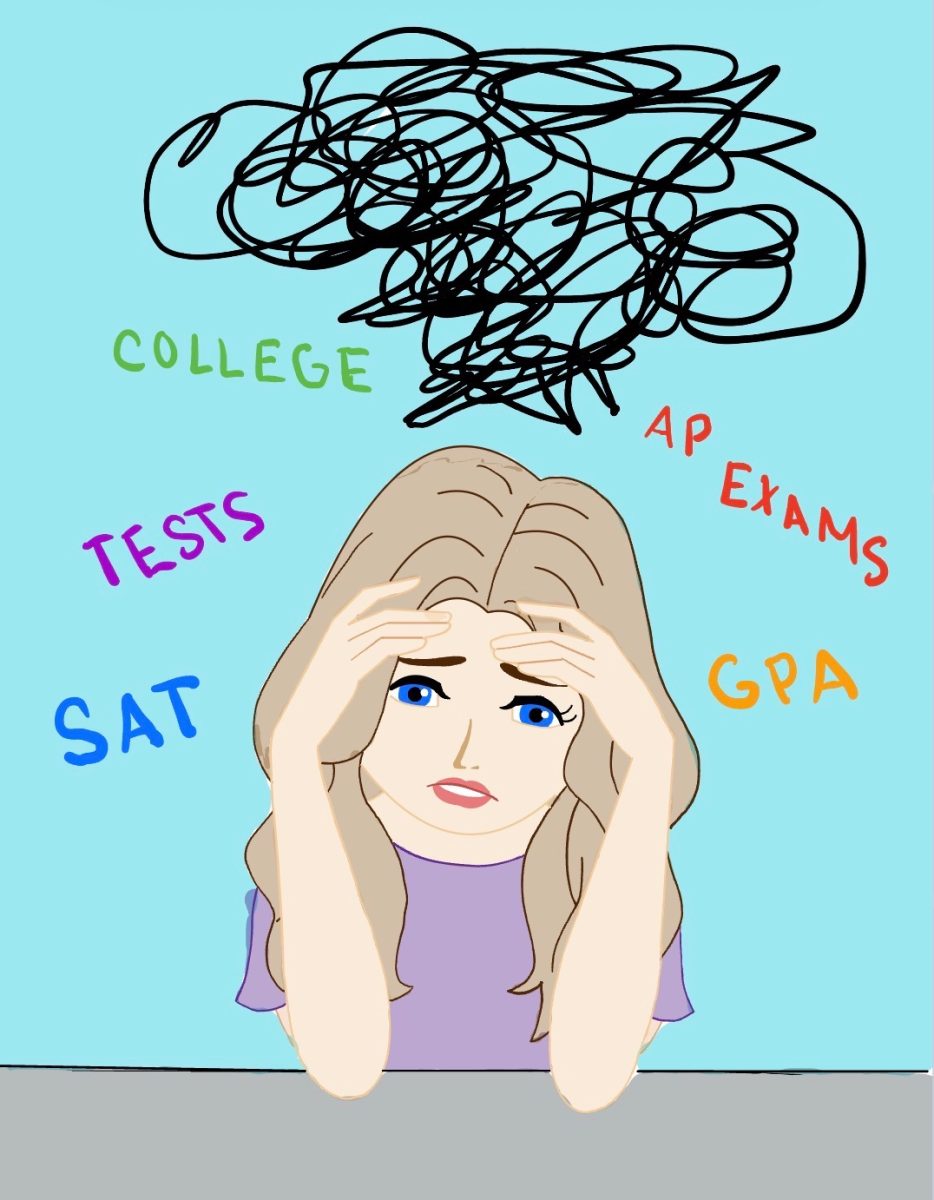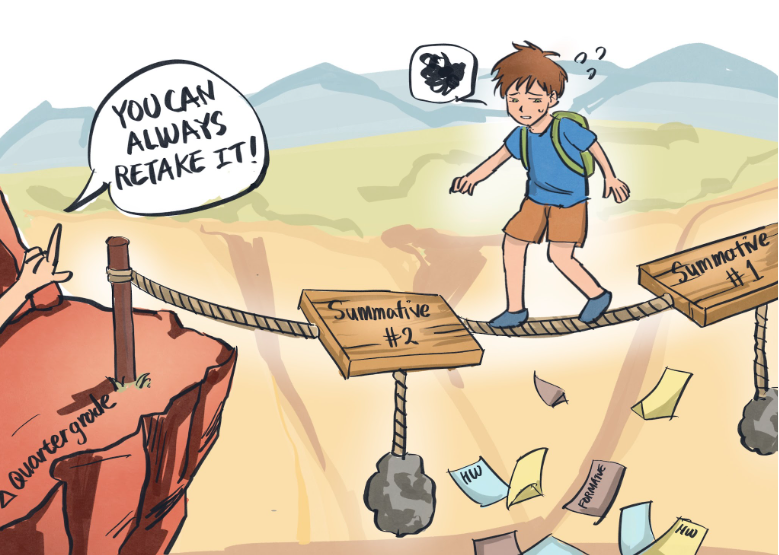

For many students, burnout doesn’t come from a single difficult class. Instead, it comes from the weeks when tests, projects and piles of homework all collide at once. Juniors juggle GPA pressures and testing, and seniors balance college decisions, leadership roles and final graduation requirements. Academic success is still important, but constant exhaustion has started to replace curiosity in many classrooms.
“A lot of the stress comes from everything piling up at the same time; tests, activities and college pressure,” junior April Ibarra said. “[The stress] is not just one thing, it’s the way everything overlaps.”
According to the Fairfax County Youth Survey, around one in four students in 8th-12th grade report experiencing high levels of stress and mental health challenges during the school year.
These pressures are not just national trends but realities affecting students locally. When stress becomes constant, it can affect sleep, focus and overall engagement in school.
Conversations about burnout among students often focus only on identifying the surface-level problems students face. However, instead of simply changing schedules or reducing workload, schools should consider how they respond to students when stress becomes overwhelming. From a student perspective, one of the biggest issues isn’t just the amount of work, but the lack of flexibility when everything happens at once.
“From what I have observed over the years, burnout is always high around [third quarter],” English teacher Michael Enos said. “I need to keep the course challenging and rigorous, but I also know that students have a lot going on in their lives.”
Rather than trying to perfectly space out assignments across departments, a more realistic solution may be building flexibility into the system. This could include allowing students to communicate with teachers about moving test dates/taking them at a different time, extending deadlines when multiple major assignments overlap, or even implementing occasional mental health days without penalty.
In many cases, students aren’t asking for less work; they are asking for more control over when they complete it. When several major assessments fall within the same week, even highly motivated students can struggle to perform at their best. Giving students increased flexibility acknowledges their workload without lowering expectations.
This kind of approach would make a meaningful difference. Most students are willing to work hard and meet high expectations, but it becomes difficult when assignments are all due at once. Offering flexibility, whether through deadline adjustments or alternative testing times, would not make classes easier, but it would make success more achievable.
Of course, flexibility comes with challenges. Teachers must maintain fairness and avoid creating an environment where deadlines feel optional. However, structured systems, such as requiring advance notice or limiting the number of extensions, could help balance flexibility with accountability.
Other supports like advisory periods or study blocks can help students stay organized, but they shouldn’t be the main solution. What students often need most is understanding and communication from teachers when stress peaks and built-in leniency for due dates that allows students breathing room, not just better enforcement of already existing policies.
“Sometimes the hardest part isn’t the work itself, but when everything is due at the same time,” senior Faith Chasse said. “If teachers coordinated deadlines more, it would make a huge difference.”
Strong academic outcomes do not have to come at the cost of student well-being. If schools want students to succeed long-term, the goal should not be to remove rigor, but to make it more adaptable. Small changes, like flexible deadlines or mental health considerations, could have a lasting impact on how students experience school every day.