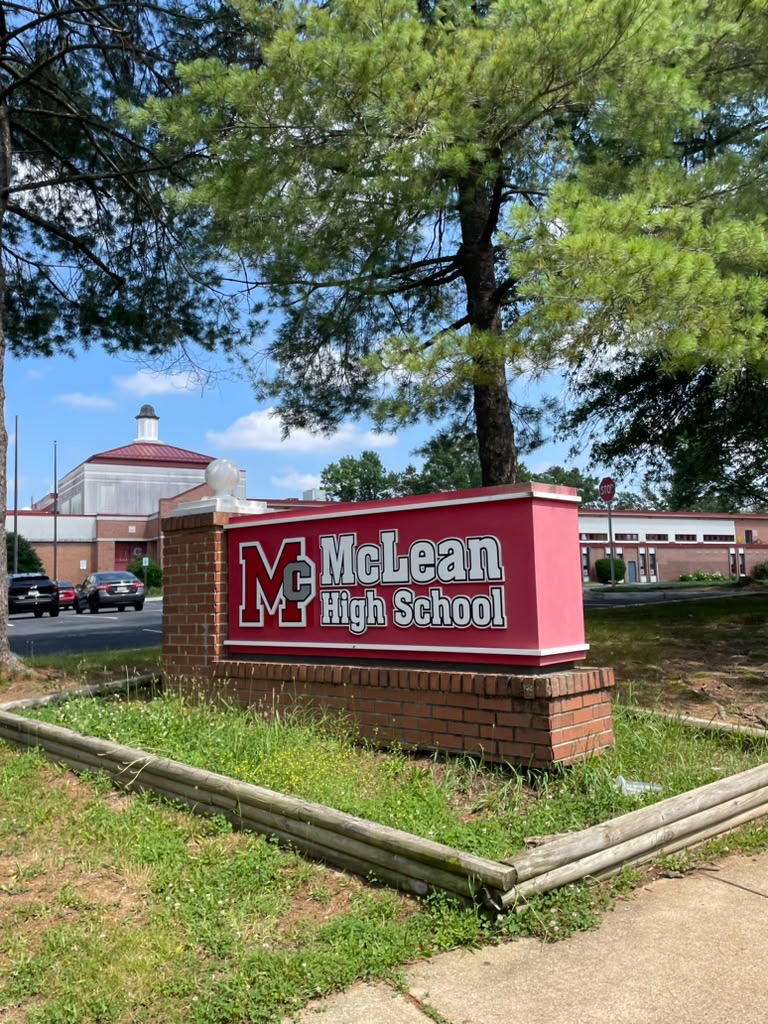

In 2022, the McLean community mourned the loss of a former baseball star, Drew Stieg. A Class of 2020 graduate, Stieg’s passing from an overdose during his time at George Mason University left a lasting legacy.
The Stieg family, founders of the Drew Stieg Aspiring Wellness Program—an organization empowering student-athletes and their families to overcome the dangers of substance use—partnered with keynote speaker and mental health advocate Sam Anthony. Together, they returned to McLean on Friday, Mar. 6, to share the importance of mental well-being and substance use to students.
“We come from a family that believes in fitness [and self-care], and Sam’s methodology and insights align with what we advocate for,” said Alexa Stieg, Drew Stieg’s older sister. “With what we went through as a family, no one knew what to do. We had to dig for resources because overdosing was rarely discussed openly [in our community]. Just like what Sam advocates about, there is a fear of opening up to other people about topics like this.”
Drew Stieg was first introduced to prescription drugs after receiving diagnoses for ADHD, anxiety and depression in early childhood. Although these exposures started with innocent intentions, the gradual dependence he developed throughout high school became an addiction that led to an unfortunate overdose. Connecting his experience to Drew’s, Anthony shared his vulnerable relationship with alcohol and drug usage.
“Growing up, there was a voice in my head that feared judgment from others, and this voice was not occasional; it was permanent. Every thought, every interaction, every conversation, that voice was always there, and I didn’t know how to get rid of it,” Anthony said. “When I was 12 years old, I tried to find my own solution, and that started with my first drink.”
Anthony described his introduction to drinking as a temporary solution to deep anxiety. Similar to Drew’s experience with prescription drugs, while doing so, this dependence only shielded and worsened that anxiety.
“I [didn’t know at the time,] but what I was experiencing was called mentalization overload. It is trying to predict other people’s thoughts to protect yourself from embarrassment,” Anthony said. “This comes from one place, and it is not fear or weakness—it is anxiety.”
Anxiety, as Anthony explained, appears similar to fear. While he often observed that many teenagers dismiss it as a minor inconvenience, anxiety is a serious form of distress that requires mindful management.
“If you want to know how addiction and unhealthy coping start, you really have to learn to recognize some patterns,” Anthony said.
The struggles Anthony faced during his younger years eventually compounded with his gradual substance and alcohol abuse. Eventually, this led him to make choices he otherwise would not have made, culminating in a series of six arrests and risking his own life.
“In 2013, I woke up in the intensive care unit (ICU) [after overdosing]. I didn’t want to die that night. I just had no idea how to live,” Anthony said. “For me, using drugs and alcohol was never about getting high. It was an anti-Sam medication. It was my only way out to silence the [internal] voice in my mind.”
Moments like these forced Anthony to rethink the way he lived. As a younger person, he struggled to embrace vulnerability—a reality reflected in the tumultuous journey he shared to help students better navigate their own challenges and prevent them from turning to substances.
“If many people go through similar challenges, why are we afraid to speak up? Is it because we’re afraid to get labeled or judged? Or are we afraid to ask for help?” Anthony asked. “[In the end,] you might not be able to choose the things people say about you, or choose the way they treat you. But if you [partake in self-reflection], you will have a choice in how you respond.”
By identifying many of the internal struggles students may experience during their teenage years, Anthony’s personal advice helped build credibility. Not only did his resilience and personal story serve as an example of overcoming past actions, but they also demonstrated that a student’s current struggles do not define their potential for future success.
“What stood out to me the most during Anthony’s speech was how honest he was about the challenges he faced and how he didn’t let those struggles define his future,” senior Youssef Zmantar said. “One thing that stood out was how he talked about turning difficult situations into motivation, which isn’t something we always hear about in a typical school setting. Hearing his story reminded me that setbacks don’t mean the end of your path and that growth often comes from difficult experiences.”
The partnership between Anthony and the Drew Stieg Aspiring Wellness Program left students with more than just a message: it opened the door to embracing tough conversations and seeking help when needed. Through this opportunity, students were exposed to a resource that was inaccessible to Drew throughout his years at McLean.
“Because it can be very hard to find assistance, I think having [speakers like Anthony] open and out for students is great for our foundation to spread awareness and break stigma,” Alexa Stieg said. “I want the students to know that there are [resources] out there, and it is normal to go through challenges, even though they might not be [as openly spoken about.]”