*Trigger warning: images depict realistic mock wounds/blood
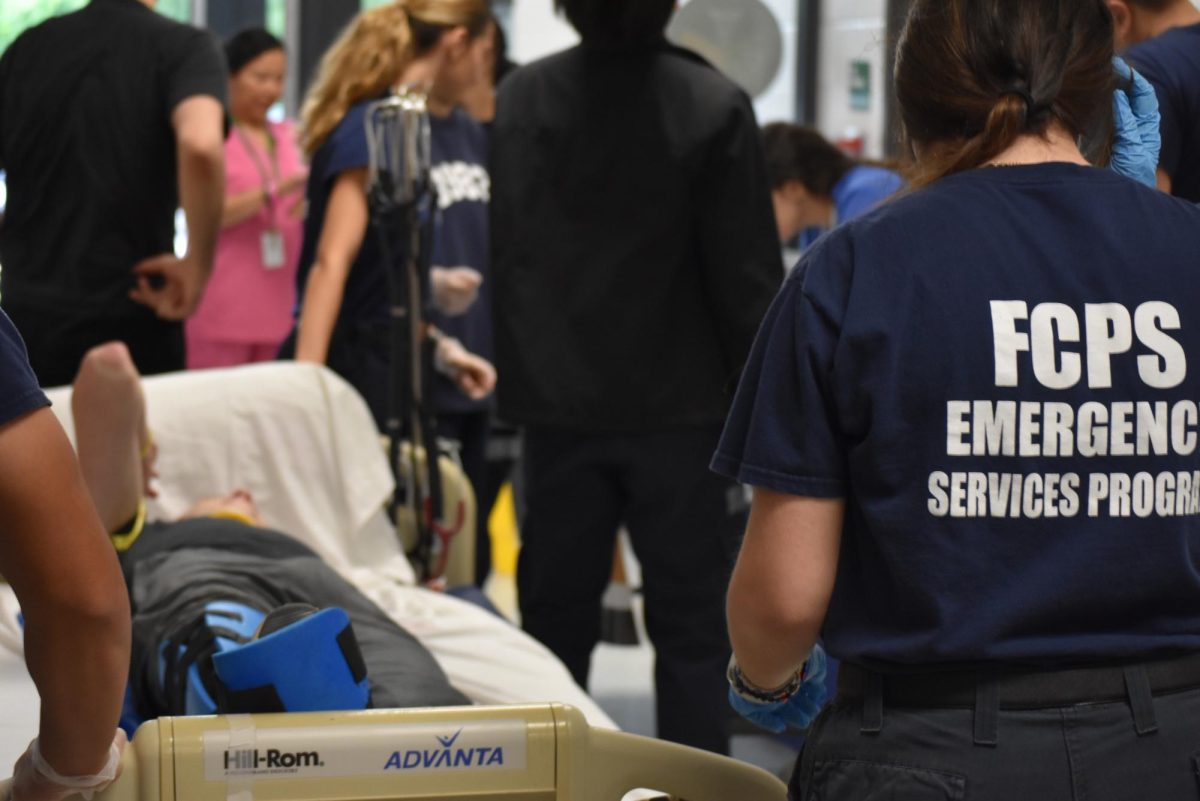
On May 22, Falls Church Academy transformed into the site of a catastrophic collision as students participated in the school’s 4th annual Mass Casualty Incident Simulation, a cross-curricular exercise designed to put their yearlong emergency response training to the test. The event provided students with hands-on experience in healthcare, public safety and emergency response as they worked together to react to a realistic crisis.
Showcasing a different scenario each year, this year involved a passenger vehicle T-boning a school bus, resulting in dozens of simulated injuries. Students from the Criminal Justice program were the first to respond, barricading the scene, gathering evidence and apprehending the driver of the car under suspicion of impaired driving.
Once the area was declared safe, EMT students were phoned in and dispatched not long after to triage victims and provide initial emergency care based on the severity of their injuries. Patients were then transported inside the academy wing, which was converted into a mock hospital staffed by students from the school’s variety of healthcare programs, who continued treatment.
Before the simulation began, the victims, students in Exploring Health Sciences, Vietnamese, and American Sign Language (ASL) courses, were assigned cards detailing their injuries and personal characteristics. Volunteers from the Community Emergency Response Team (CERT) applied professional medical moulage, or special effects makeup, based on the victims’ assigned injuries to replicate realistic wounds and contusions.
“The victims all look like victims,” Lintott said. “They’re bleeding, they’ve got impalements–all sorts of things. So they truly look like they’ve been injured.”
Depending on their observable injuries, triaged victims were brought to their required treatment room inside the mock hospital, receiving care from students in Introduction to Nursing, Medical Assistant, Patient Care Technician, Practical Nursing, Dental Careers, and Pharmacy Technician programs.
A multitude of patient scenarios were implemented in order for all disciplines to be involved. Some patients required dental assessment and emergency treatment for dental deformities, while others got medications and prescriptions filled through the pharmacy program after medical assessment.
The simulation also incorporated medical procedures such as administering IVs and assisting in the delivery of a baby using a birthing simulator as a pregnant victim was built into the situation.
Students in the Biotechnology Foundations program were also actively involved in the exercise through background diagnostic testing. Students conducted laboratory analyses through ethanol blood tests to assess the blood alcohol concentration of the suspected alcohol-impaired driver in communication with the Criminal Justice program. Some patients also required a Troponin T test, a blood test used to diagnose heart damage.
Communication barriers were intentionally built into the scenario to add another layer of realism with some ASL and Vietnamese students portraying patients who were deaf or primarily Vietnamese speaking, while others assisted medical teams by acting as interpreters and translating information between patients and healthcare providers. This exposed healthcare students to commonly faced communication challenges they may encounter and allowed for the language students to apply their skills in a real-world situation.
Language students also participated in a simulated news broadcast reporting at the scene of the crash, providing live interpretations to contribute to the immersiveness of the simulation.
“It’s really just the incorporation and the overlap of the curricula that we’re fortunate enough to have a demonstration like this,” Lintott said.
The simulation ran multiple times throughout the school day during 1st, 3rd, and 5th period—or once during each academy period—allowing different groups of students to participate in the scenario. Each year, organizers develop a new mass casualty incident to prevent students from predicting what they will encounter in order to test students’ quick critical thinking under pressure.
The event initially began as an idea proposed by Lintott during her job interview. Due to her role, she worked closely with all of the academy’s programs and as a result, recognized the opportunity to bring all of the academy courses together using an engaging, collaborative experience.
The annual simulation reflects Falls Church Academy’s broader purpose of preparing students for their future disciplines by fostering real world experience, teamwork and communication. The exercise allowed students to step into the professional world and bridge the gap between the classroom and real hands-on experience.
As students worked together to handle the crisis, they encountered challenges encountered by professionals. This allowed students to not only showcase their skills, but understand how collaboration across disciplines can save lives.