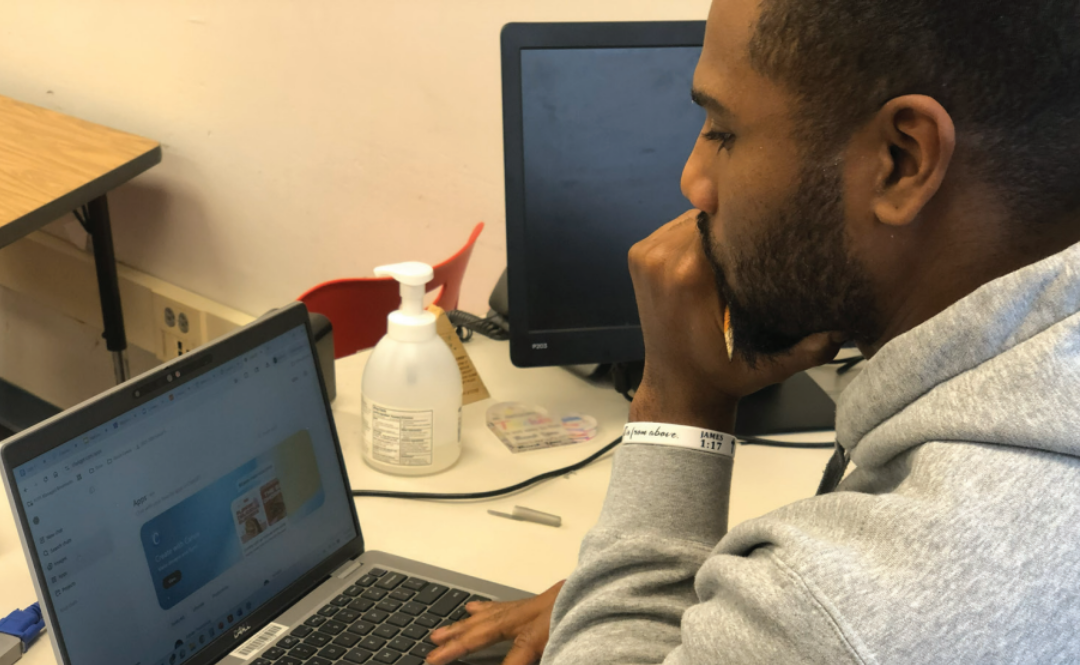
While ChatGPT has established a strong presence in everyday use, most have always expected it to be excluded from the classroom due to its potential to facilitate academic dishonesty. This paradigm shifted on Dec. 2 when FCPS added ChatGPT for Teachers to the list of tools available to staff.
FCPS is one of 16 counties across the country to pilot ChatGPT for Teachers. Discussions about a collaboration between FCPS and OpenAI were ongoing last year until a contract was finalized. The contract allows FCPS teachers to use the application for free until June 2027.
“[We can use it for] lesson planning and planning practice assessments,” school-based technology specialist Bridget Donoghue said. “One really cool feature that it has is you can speak to it, and it speaks back. If I told ChatGPT, ‘You’re a teacher who’s meeting with a parent who doesn’t speak English; they speak Spanish with a Mexican dialect,’ it can translate everything.”
The introduction of ChatGPT for Teachers comes after previous moves by FCPS to keep up with the growth of AI, including making Google Gemini available to staff at the end of 2024.
“People should be able to use the best tool for them,” FCPS Chief Information Technology Officer Gautam Sethi said. “ChatGPT is used extensively by people in their personal lives, so we see the opportunity for people who are familiar with that tool along with our ability to access it in a safe, secure [and free] manner as the perfect [way] to provide it.”
Unlike the standard version of ChatGPT, ChatGPT for Teachers includes features that assist in collaboration between colleagues, teacher-specific onboarding—the process of integrating new staff into the county—and administrative tools.
FCPS technology specialists found OpenAI’s offering ideal because ChatGPT for Teachers is an enterprise tool, meaning FCPS has full control over it, primarily regarding privacy and security. It complies with FERPA, which is a federal law that protects students’ educational data records, and it provides a student data privacy agreement.
“ChatGPT for Teachers allows us to have a secure environment,” Sethi said. “If all our teachers were using free public accounts, they wouldn’t have the same privacy controls, security controls or audits. Our goal is to provide trusted tools within the environment which our staff can engage with.”
With AI becoming more prevalent in the classroom, people have concerns over to what extent the tool will be used in teaching.
“I think AI can be used in positive ways to streamline tasks, but we don’t want to get into the area where we are losing our ability to think critically,” Donoghue said.
While people remain wary of AI’s impact, some educators are already exploring and embracing the new technology.
“I’ve used ChatGPT for looking at how to structure a paper in terms of the wording—if that’s the best way to do so for a specific classroom, especially with educators that are teaching multiple different grade levels,” learning disabilities teacher Ky Parrott said.
By adding more AI tools to teachers’ inventory, FCPS hopes to be able to develop students’ abilities in navigating AI as it becomes a prominent part of society.
“Our goal is to make sure that we can get universal AI literacy for all, and that starts with our staff,” Sethi said. “When our teachers know what AI is, they are the best [at fostering this literacy]. We want to figure out how to build the understanding to use AI in safe, responsible and ethical ways.”