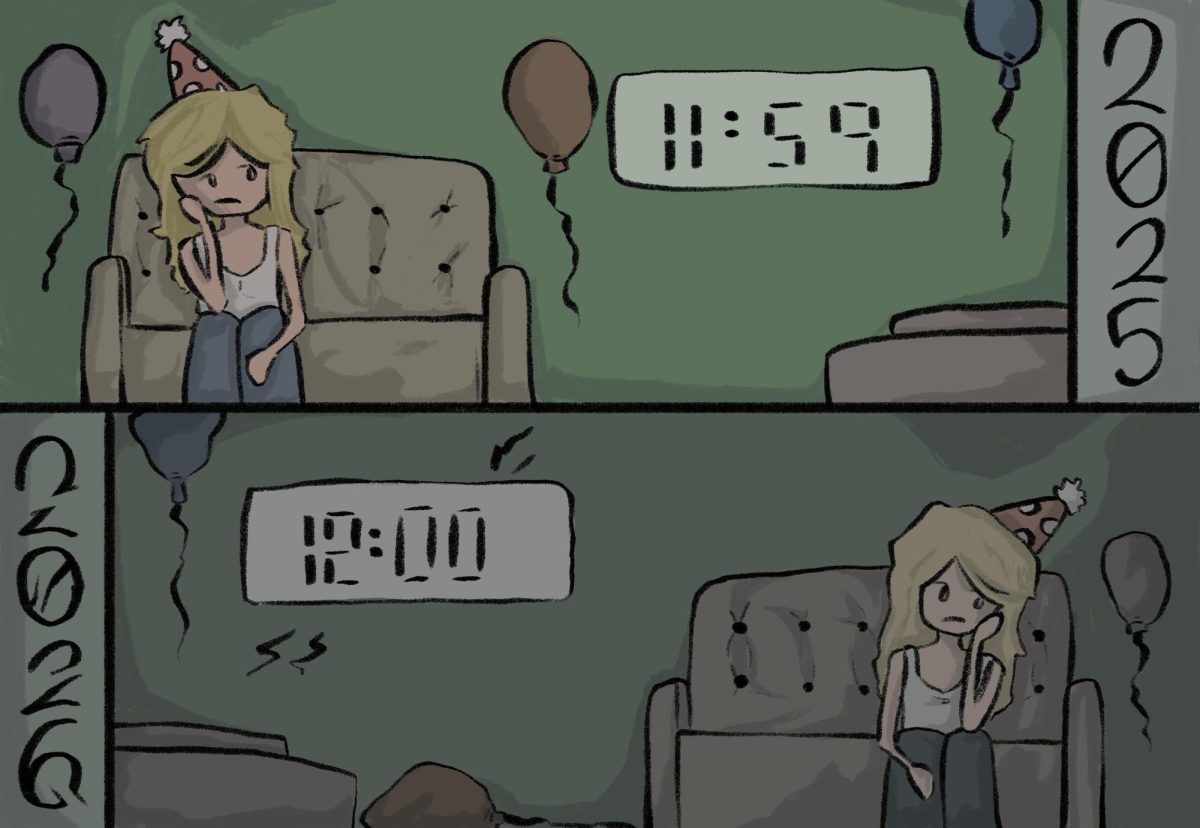
For decades, the New Year has been framed as a time for reflection, change and fresh starts, but for many McLean students, Jan 1 does not feel like a reset at all.
Instead, the New Year comes in the middle of the school semester, during ongoing stress, unfinished assignments and academic pressure that doesn’t pause for the calendar.
“January first does not feel meaningful to me anymore,” sophomore Laila Adams-Christian said. “Even though it’s a new calendar year, school keeps going, so it doesn’t even mean anything.”
For many students, the New Year arrives in the middle of not just classwork, but also sports seasons, practices, games and tournaments that continue through Jan. 1. Instead of marking a natural stopping point, the New Year acts as an interrupter.
“It’s like nothing’s really ending besides the year. I’m still mid-season for sports,” Adams-Christian said.
The New Year also increases stress for students. Pressure to start the year off “right” adds to the already intense demands from school and sports.
“This school year is just so important because of college [applications],” junior Shanmukha Vedantam said. “The New Year’s expectations to be perfect do not help, it just makes me more stressed.”
The structure of the school calendar often has more influence on students’ stress levels than the calendar year itself.
“If they don’t have a fresh start, it’s actually more stressful than just finishing in December, because you don’t remember everything and you’re jumping back in midstream,” said Lesley Frew, computer science teacher.
As students get older, many stop treating the New Year as a meaningful milestone. Fewer students make resolutions, and the excitement of staying up until midnight fades.
“I used to be excited [for the New Year] and celebrate with friends, but now I just treat it like a normal day of break,” said Vedantam.
This shift becomes even more noticeable as students grow up.
“I used to care about the New Year when I was younger,” said Adams-Christian. “Now I just have to worry about school. If anything, it just signifies that the break is ending.”
That stress is closely connected to how the school year is organized. The timing of grades, units, and assessments plays a role in how the New Year is experienced.
“Unless a teacher carefully plans units and grades in December, students come back still in quarter 2 with tests and assignments waiting for them,” Frew said. “[The schedule] just creates even more stress.”
For students, there’s still one part of the calendar that gives the New Year some sense of a pause.
“At least the New Year is during winter break, because then when we go back [to school] it feels more like a reset.” Vedantam said.
Even with New Years arriving during winter break, teachers feel that the pause from the break is too short and often feels out of place, cutting into the middle of the academic calendar rather than offering a true ending or beginning.
“The quarter always ends at the end of January,” said Frew. “You leave for two weeks pretending school doesn’t exist, and then you come back and it hits you in the face.”
For some students, that pause feels more meaningful when it aligns with an actual academic change.
“I wish the break wasn’t in the middle of the second quarter,” said Adams-Christian. “It would make more sense if it was at the end of the quarter.”
As winter break ends and classes resume, the New Year blends back into the academic school year. For many students, the New Year is defined more by grades, schedules and deadlines than by the date on the calendar.