
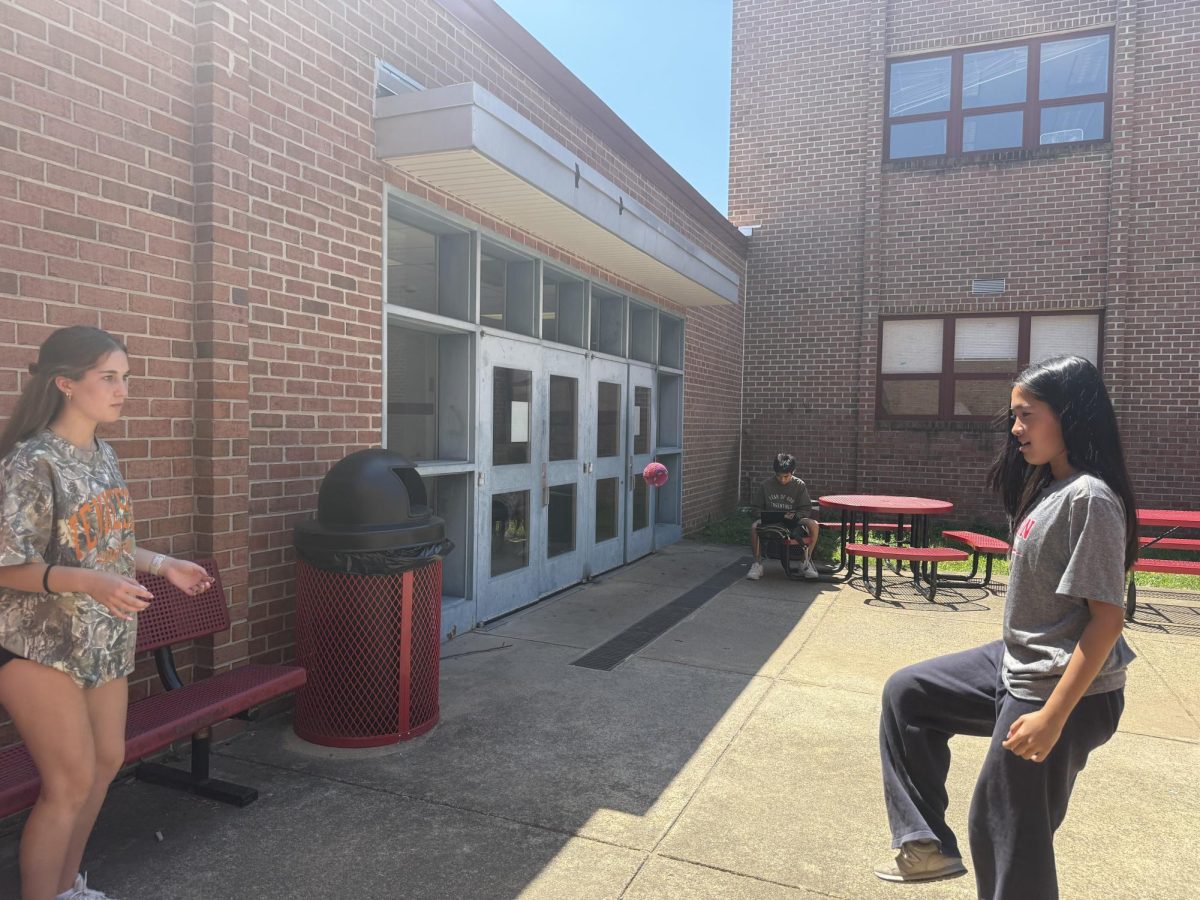
In classrooms, at lunch, after school and across the hallways, students at McLean High School laugh and smile widely as they try to keep tiny woven footbags in the air. With no phones to be seen, the scene looks almost as if it was pulled right out of a 1990s film. Yet this retro moment is not only a relic from the past, but a look into the possible future of social connection.
Across the country, students are starting to pick up a sport from the 1980s: hacky sack. Popularized by teens as a pastime, hacky sack involves keeping a small bag, usually filled with rice, up in the air without using one’s hands. This fun blast from the past has made its way back to classrooms in high schools across the country, bringing back a sense of community and friendly competition.
However, what seems to be a temporary trend is uncovering something deeper about Gen Z: students are craving face-to-face connection in a screen-dominated world. This recent hacky sack resurgence signals a shift back to offline culture.
Hacky sack is the ideal “sport” for bringing about such tangible connections as it requires no screens, no expensive equipment, little skill and no pressure. Games are easy to join and are low pressure, making this the perfect trend to resurface for Gen Z. Unlike organized sports, hacky sack allows anyone to join circles and work together with others without a competitive aspect.
“Its a really fun activity that is not too pressuring,” sophomore Roxanna Sharafi said. “All people at any athletic level can play together and build connections with other people that you may not get to know otherwise.”
This rise of hacky sacks in Gen Z is significant, as it highlights how students are beginning to realize the benefits of in person interaction. Before, students would play on their phones at lunch. Shifting from Brawl Stars to hacky sack has only helped students connect in ways they had not before.
“It’s a fun way to bring people together and make friends,” sophomore Sabrina Rosenzweig said. “It’s so cool to see McLean students getting together to play a silly little game and connect with each other again.”
At McLean, students have created Instagram accounts to post students playing hacky sack. “Mclean_sack” posts videos of students in circles showing off their impressive footbag skills. These communities make it significantly easier to join in on games as more players only increases the intensity of the game, increasing the fun.
Online groups including Instagram and TikTok accounts create a place for students to showcase the hacky sack talents at their schools, connecting people further. Many schools have also created “varsity hacky sack” accounts and are going viral online, extending the trend.
The northeast in particular is seeing an explosion in hacky sack popularity. The Globe reported that recent Google searches for “hacky sacks” have been concentrated in Massachusetts and Connecticut, increasing by about 5000%. Although popular online hacky sack groups originated from the lacrosse teams of New England prep schools, the game is spreading to mainstream groups, creating a beneficial space for students to connect face to face.
Accompanying their rise in popularity, hacky sacks have become increasingly harder to find in stores. Local Dicks Sporting Goods, Child’s Play Toys, Doodlehoppers and many more are wiped of their footbag supplies. Online, hacky sack prices are skyrocketing as some sellers see their website activity grow by over 2000%.
Keeping constant with other trends which are resurfacing from the 1980s-90s, vinyl records, digital cameras, thrifted clothes, wired headphones and now the hacky sack all made an explosion in the recent media. The idea that hacky sacking-ing is a large trend encourages students to join in, creating some irony as they are verging away from their phones. Nostalgia of students now is going to mirror that of a kid in the 80s, circling back in culture.
No matter the reason for the rise of footbag, the game is becoming revolutionary for Gen Z. The generation raised online turns to footbag for an exciting collaborative challenge, creating new communities within schools and encouraging a turn away from phones.