



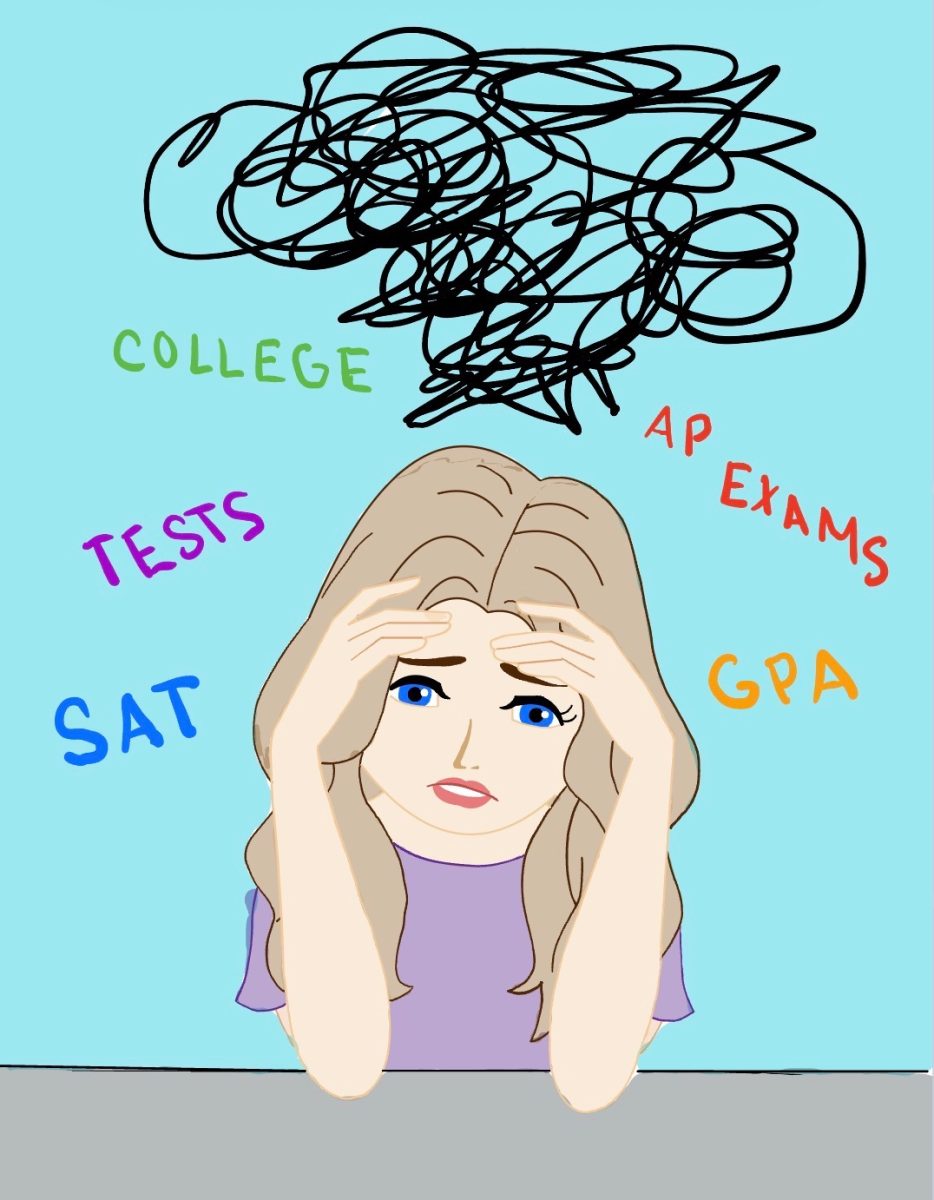
With weekly quizzes and back to back tests, student burnout is already high. Now imagine staring at a bad grade for not just one quarter, but the entire year. That’s what a student’s life will look like under the rolling gradebook.
In the upcoming 2026-27 school year, the rolling gradebook will replace the current quarterly gradebook across FCPS. This change will significantly impact students—and not for the better.
The rolling gradebook increases student pressure by removing the opportunity for a fresh start. Instead of a blank slate at the beginning of each quarter, the rolling gradebook carries students’ grades from the first day of school all the way to the last.
Viewing a low grade for months on end could drain student motivation. Struggling students may feel discouraged after seeing low scoring assignments accumulate from the beginning of the school year, making them believe they may never catch up.
“The rolling gradebook would demotivate me,” sophomore Michelle Park said. “I’m going to be viewing a horrible [grade] for longer.”
Beyond decreasing motivation, the rolling gradebook also makes it harder for students to raise their grades; it masks progress made from quarter to quarter. As more assignments are entered into the gradebook, the weight of new grades diminish.
This is especially detrimental when students don’t perform well in their first quarter of the year. A low summative grade in quarter one can heavily drag down a student’s average, and higher grades earned later in the year would only allow for a minimal increase.
While the start of the year may seem like the perfect time to begin the year strong, it is often easier said than done. During the beginning of the year, students are still adjusting to new teachers, new content and challenging material.
In this introductory period, students should not be forced to bear the burden of achieving a high grade, especially while they are still forming proper study habits.
Despite the negative consequences of this change, some argue that implementing a rolling gradebook would benefit students’ grades. The rolling gradebook allows teachers to easily replace coursework and test grades from past quarters. This gives students more opportunities to remediate their assignments, helping students achieve the best grades they can.
However, not all subjects are built equal, so that approach is not applicable to all classes.
“With [the rolling gradebook], you can retake things until you master the skill. But there’s a lot of English that isn’t skills-based, like reading quizzes and things like that,” said English teacher Joy Korones, who has previously used the rolling gradebook. “You can’t have a rolling gradebook be effective because it’s a one-time assessment.”
Even if the approach is implemented in a heavily skills-based class, students may use it as an opportunity to slack off.
“Kids will put off studying or being ready for something because they know that if they do poorly, they can just [replace] it later,” Korones said.
Although some believe students may reap certain benefits from the rolling gradebook, it doesn’t eliminate the detrimental impacts it has on their education. The cumulative gradebook applies excessive pressure on students and limits grade improvement throughout the year. If FCPS wants to better student learning, the quarterly gradebook should be here to stay.



Jeff Bailey • Apr 17, 2026 at 12:15 pm
Thank you for sharng your insights in this article. I found this while researching a change to rolling grades–and your view point gave me things to think about.