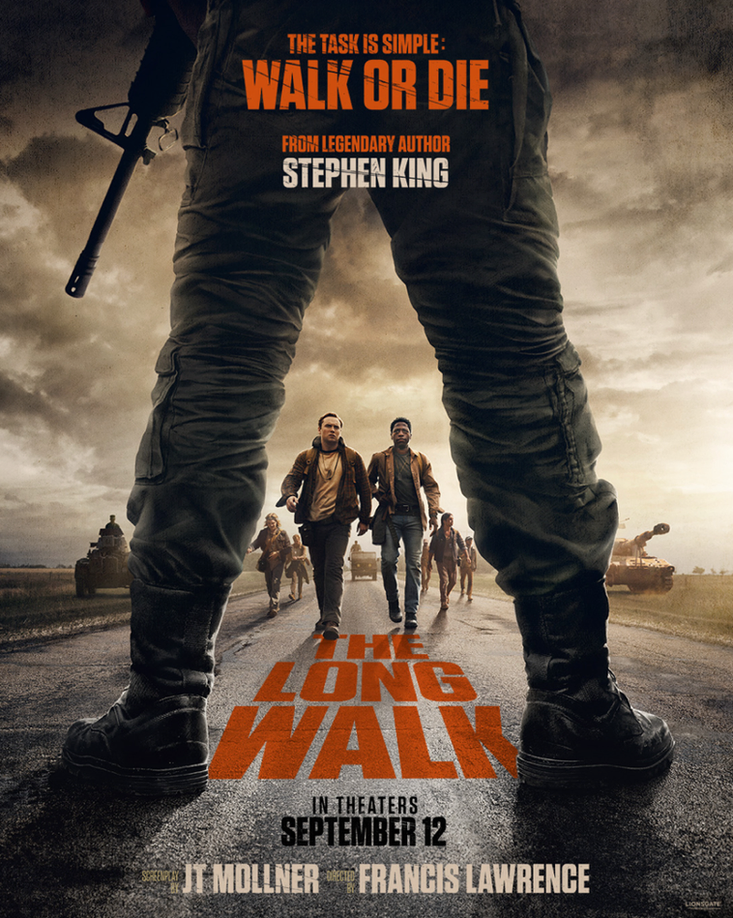
The Long Walk serves as a summary of the movie as much as a title, but I would urge viewers not to write it off as dull or tedious too early on. One hour and 48 minutes of walking based on anything other than a Stephen King novel would likely be poorly-executed—better used to lull children to sleep than entertain a crowded theater. However, the adaptation’s characters, plot, pacing and overall execution create a riveting and heart-wrenching story, turning something as simple as hiking up a hill into an edge-of-your-seat nail-biter.
The movie opens with a slow start, stretching out an premise anyone who watched the trailer would know: walk or die. While the need for tension within the story is understandable, further delving into the premise makes the introduction seem laggy, and the punch when the first contestant dies seems much too predictable.
Once the movie settles in, though, The Long Walk finds its footing. The film balances suspense and emotion, creating an atmosphere that is both haunting and entrancing. With a heavy focus on what the characters find and lose along the way, the baseline premise often fades into the background, closer to a looming threat than an all-consuming fear.
Each participant in The Long Walk feels unique, with carefully a written personality and believable motivations. Their conversations, which often focus on survival, morality and regret, give the story an emotional weight. One character specifically—Peter, played by David Jonsson—has a beautiful and inspiring outlook on the world, stemming from a complex and well-constructed backstory.
Despite the minimal action, the dialogue is sharp and layered, showing how fear and exhaustion strip people down to their rawest selves. The film manages to stay engaging without relying on constant flashbacks or an escape from the situation, making viewers feel actively connected to the characters on the walk.
Cinematically, the movie does very much with very little. The long, bleak or beautiful shots of the countryside emphasize different stages within the walk and the characters themselves. Variety in weather and terrain of the road keeps viewers engaged. While the violence is occasionally brutal, it never becomes excessive; the horror comes more from anticipation and the underlying ideas being communicated than what is being overtly shown on the screen.
The ending, however, is where the movie falters. One character’s final decision doesn’t quite align with their earlier ideals, and makes the moment feel wrong. While it is likely that a large amount of planning and deliberation went into the ending, and it could be considered somewhat poetic, I believe the writers tried to pull too hard on a string that was otherwise perfectly threaded.
The Long Walk is an intense and thoughtful adaptation that keeps viewers hanging on the edge of their seats. It trades explosions and jumps for quiet tension and emotional realism, making the mission more about endurance than spectacle. While not perfect, the film is sure to linger in viewer’s minds as it did my own, long after the credits rolled.