
Governor Glenn Youngkin recently signed sweeping legislation into law, mandating that all public K-12 schools in Virginia must enforce a “bell-to-bell” cell phone-free policy during instructional hours and passing periods. The new statewide law stems from Youngkin’s previous Executive Order 33, issued in July 2024, which took immediate effect during the 2025-2026 school year. Although Youngkin’s order demands that phones must be put away during all school hours, FCPS made their own adjustments.
“The Board [of Supervisors] decided to interpret the law and allow high school students to use their phones during lunch times,” Chief Equity Officer Nardos King said. “Our Board is being supportive of students’ needs by allowing students to use phones during lunch, and I don’t think we should go beyond that because the law is the law.”
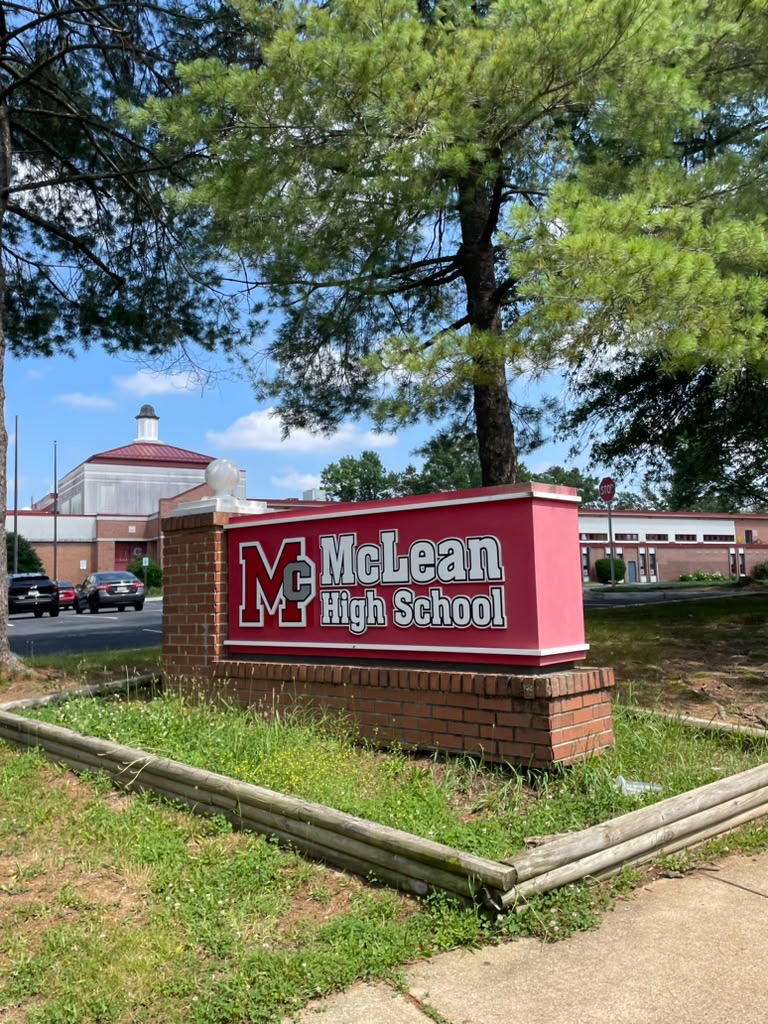
The transition was already underway as early as last school year, with McLean being part of FCPS’ pilot program. McLean was one of the schools to test the use of secure storage units or “pouches” for students to store their phones in during class.
“During the pilot process, we met with principals at the beginning weekly and then we started meeting with them monthly,” King said. “Then at the end of the year, when we started crafting the policy, we got feedback from principals, and from students [through surveys].”
The legislation includes exceptions for those with special circumstances such as documented medical needs, IEP’s and 504 plans.
Proponents of the policy emphasize improved learning and well-being, arguing that cellular devices not only cause distractions within class as well as reduced positive social interaction.
“The data going around between principals have been very positive with the phones away,” former Acting-Principal Melissa Brady said. “It’s a positive impact on academics, because if you are more engaged, you will be more successful.”
McLean was among a few schools who began practicing the policy in week two of the school year instead of week one.
“We, as a school, decided to wait till week two, and a lot of schools did not,” said Brady. “I felt like there were so many changes at McLean already [with new administrators], so we decided to give it a week with verbal warnings and verbal reminders about not using the phones.”
Students harbor strong opinions towards the new phone policy.
“To lock away phones for 8 hours of the day is crazy, and even though we can use it during lunch, you can only use it in one specific area,” junior Entisar Neji said. “At that point, it just seems like it’s not really about having kids learn; it’s more about control over students.”
In addition to the newly amended phone usage rules, FCPS is also requiring stricter crackdowns on phone usage. Students who disobey the rule face disciplinary action such as detention and losing their phone for up to 20 school days.
“We met with principals that participated in the pilot to help us craft what the consequences were,” King said. “Our policy is [based on] the Students Rights and Responsibilities.”
Despite potentially strong dissent from students, the county and state are determined that limiting the use of phones will eliminate distractions in the school environment.
“It’s hard for all of us to adapt to change,” King said. “For some students, it’s such an addiction, and I don’t want us, as a school system, to contribute to those kinds of things that disrupt students’ learning.”