



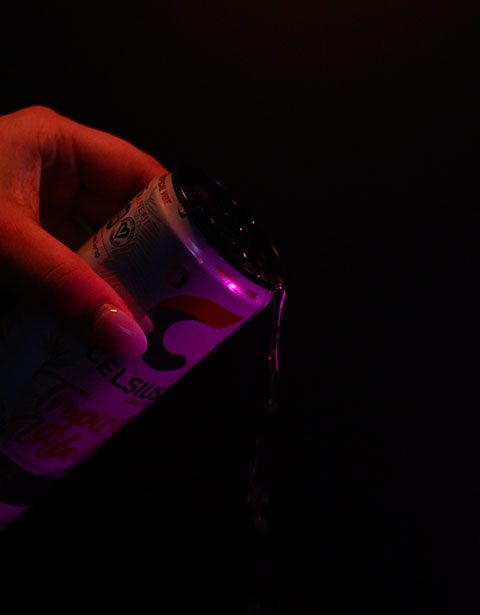
Waking up bright and early after only getting a couple hours of sleep, senior Leyal Barakat starts the day with an ice-cold Celsius energy drink. She indulges in another Celsius during her last period, finally enjoying a large cup of coffee after getting home from an exhausting school day.
Once the coffee kicks in, Barakat begins to tackle the mountain of homework that awaits her, only to repeat the routine the next day. This endless cycle of caffeine addiction is the everyday reality of millions of students across the country.
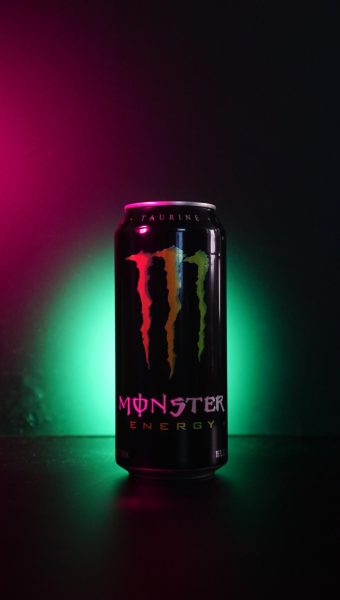
Caffeine is nearly impossible to avoid, with a wide assortment of energy drinks available at every grocery store. Caffeine is found naturally in cacao beans, tea leaves and guarana berries; it can also be produced artificially and is often added to drinks, foods and supplements. The most common caffeine sources for young adults are sodas, coffee and energy drink brands such as Celsius, Monster and Alani Nu, with one can packing in around 200 mg of caffeine.
“[Energy drinks] have become part of my routine now,” senior Emma Duffy said. “I need to have one in the mornings, whenever I’m at Target or if I see one at a gas station. My cousin has a reorder setting on Amazon that automatically reorders [a case of Alani Nu] every week.”
A survey of 328 McLean students found that 32% of students’ first choice of caffeine is coffee. Sodas and energy drinks follow closely with 21% and 20%, respectively, while 15% of students said they prefer tea.
“Each day, I consume two to three coffees, as well as one or two energy drinks, depending on how tired I am or how much energy I need based on what I’m doing [that day],” junior Liz Daly said.
Although caffeine is traditionally seen as a harmless pick-me-up, the effects of overconsumption can be detrimental due to the nature of it being a stimulant.
“Caffeine is considered a drug because it has an impact on mental processes and behavior,” AP Psychology teacher Joseph Dwyer said.
Typical cognitive impacts of caffeine include increased concentration and improved mood at a moderate intake. However, high consumption of caffeine can lead to elevated anxiety or jitteriness. The negative effects of the drug often outweigh the benefits, yet millions of students continue to excessively consume caffeine.
“A lot of drugs do this, where the more you use [it], the more your body depends on it to be in its natural state,” chemistry teacher Allison Miller said. “Without it, you’re actually worse than you were before you started consuming it.”
Barakat is not alone in her overreliance on caffeine. Around 72% of students at McLean said they regularly drink caffeine, with 12.8% drinking it daily and 17.1% drinking it at least three times a week. The American Academy of Pediatrics suggests 100 mg of caffeine per day for teens ages 12-18, but still recommend avoiding it entirely. This amount differs for adults, as an average 140-pound adult may safely consume 200-300 mg.
“Last year, my [crew] team and I did a caffeine-free week, and it was the worst week of my life,” Barakat said. “That’s when I realized I really needed to try and cut back [from caffeine]. I was going through withdrawal.”
This trend extends beyond McLean. According to a study by the International Society of Addiction Journal, 22% of caffeine consumers between the ages of 13 and 17 showed at least three indicators of caffeine dependence. These may include the desire to limit caffeine intake, using caffeine despite knowing its harms, a need for it to function normally, increased tolerance and withdrawal effects.

Causes of Consumption
For many students, caffeine consumption throughout the day begins when exhaustion hits hard in the morning and making it through the school day seems impossible. That single moment snowballs into a cycle of reliance, with every new bout of exhaustion sending them back to caffeine.
“[Drinking caffeine has] become part of my daily routine now. I feel almost naked if I don’t have [a drink] in my hand at the start of the day,” Barakat said.
Although there are multiple reasons for students’ exhaustion and their decision to start drinking caffeine, the primary reason is the overwhelming amount of schoolwork students have on their plates. Many feel pressured to constantly perform at their highest level or risk falling behind.
“At McLean, there’s a culture of more is better,” Dwyer said. “Students are often on course loads that are much more intensive than they need to be. As a result, they might stay up later than they need to so that they can get their work done, [causing them to] rely on caffeine.”
According to Dr. Florencia Segura of Einstein Pediatrics in Vienna, Virginia, sleep deprivation is the main reason students are drawn to caffeine.
“Teenage patients I see are plagued with a lack of sleep,” Segura said. “Along with screentime and the effects of blue light right before bed, caffeine is without a doubt the main driver of these issues.”
Sleep deprivation is particularly widespread among teens, and when combined with caffeine, it can lead to devastating consequences. According to a survey conducted by the Centers for Disease Control and Prevention in 2025, seven out of 10 high schoolers suffer from sleep deprivation, meaning they get below the suggested eight hours of sleep every night.
“Part of being sleep deprived is not being able to manage our time effectively, either through overscheduling ourselves or due to being distracted and not being able to use the time we have in a beneficial way,” Dwyer said.
The stresses students endure do not simply end after the school day is over. Many have sports or after school activities that end late at night and drain them even further, pushing them to seek the boost of energy found in caffeine.
“A lot of girls on my cheer team have an energy drink [at practice],” Duffy said. “We’re just so drained because our practice is so late. We get really stressed throughout the day—we have so many tests and classes that it’s hard to have practice after school because we’re all so tired. So [caffeine] is just a little pick-me-up, something to keep us going.”
The Cost of Consumption
Caffeine is known to be a natural energy boost, but overconsumption results in health consequences. According to the Mayo Clinic, drinking caffeine can lead to jitters and cause people to feel on edge, leading to anxiety issues and an increased heart rate.
“There are certain brands of energy drinks that tend to make me shaky because they have more caffeine than others,” Duffy said. “I get especially shaky when I haven’t had anything to eat before drinking them.”
In addition to physical effects, there are mental drawbacks that can follow overconsumption. As the body builds a dependency on coffee or energy drinks, people begin to believe they need less sleep because they feel energized from the caffeine. In reality, this is damaging to a person’s sleep cycle and mental health because it can cause consumers to be more tired the next day, leading them to drink more caffeine to power through. As caffeine intake leads to sleep deprivation, a domino effect begins to take place on a person’s cognitive state.
“When a person is sleep deprived, they can’t form memories as well, can’t hold memories as long [and are] more likely to get sick,” Dwyer said. “[Overconsumption] and sleep deprivation are also associated with higher levels of obesity and more mental health problems.”
Following these consequences is the possibility of high blood pressure and heart palpitations.
“Caffeine can raise your heart rate and your blood pressure. It definitely alters your cardiac function and then forces your body to release other [neurotransmitters],” Miller said. “If [energy drinks] are something you’re used to having every single morning, I think that’s an unhealthy [way] to get your day started.”
According to UC Davis Health, caffeine prompts the release of norepinephrine and noradrenaline, two neurotransmitters that lead to the increase of blood pressure and can cause extra heartbeats known as palpitations.
“I personally do not drink any caffeine, mostly because I have had cardiac issues my entire life,” Miller said. “If I drink more than like two or three sips of Coca-Cola, I feel like my hands are shaky, so I just don’t drink any.”
Cholesterol, another major chemical that affects cardiovascular health, is also affected by caffeine. A healthy level of cholesterol is measured under 200 milligram per deciliter of blood (mg/dL), and any range over 240 mg/dL is considered high. According to MedStar Health, consuming large quantities of coffee regularly increases one’s cholesterol level by nearly 12 mg/dL. High cholesterol in teenagers can cause plaque buildup in the artery walls, which eventually leads to irreversible damage to the arteries and worsens with age, putting them at higher risk for heart disease and strokes.
“I had a friend who had to stop drinking coffee because it was giving her heart trouble, [and] she had to go to the hospital a couple times,” biology teacher Julia Murdock said. “So depending on your physiology, some people are told they can’t drink caffeine anymore because it is affecting their nervous systems and their hearts.”
Students may recognize that they consume much more caffeine than they should, with the FDA recommending around 400 milligrams a day, but it doesn’t stop them from overindulging in caffeine, as the allure of enhanced productivity often seems more to outweigh the side effects. In reality, it can be hard to focus with high levels of caffeine in the body because a person’s nervous system cannot tolerate such large amounts, making it a problem for students who drink upwards of 600 milligrams daily.
“When I drink caffeine, I feel the jitters almost immediately,” senior Anderson Velasquez said. “I usually end up getting nothing done.”

Addiction and Dependency
It took one latte, a soda and an energy drink to kill a 16-year-old boy during school hours in South Carolina in April 2017. On their own, each of these drinks contains an acceptable amount of caffeine, with around 110 milligrams per 12 fluid ounces. However, within the span of two hours, the consumption of all three resulted in a caffeine-induced probable arrhythmia. Death by caffeine is a very rare occurrence, but with teens’ intake increasing significantly during high school, incidents like this could increase.
“If you want to go by the book, the textbook recommended maximum caffeine intake for a teenager is 2.5 milligrams per kilogram of body weight,” Segura said. “That equates to about a cup and a half of coffee for an average teenager.”
While each person reacts to caffeine differently, for many, dependence can create serious health issues in the long term and the difficult and painful withdrawal process also adds to its drawbacks. In The Highlander’s survey, over 20% said they drink 200 milligrams of caffeine per day, with 10% consuming above 300 milligrams.
After drinking caffeine consistently, consumers go through withdrawal due to the body’s reliance on the stimulant. According to the Mayo Clinic, withdrawal symptoms are the result of an increase in blood flow around nerves in the brain after cutting off consumption.
“Teenagers [who] simply cut out caffeine abruptly are going to experience uncomfortable side effects,” Segura said. “Headaches, fatigue and decreased alertness—all of these are going to peak about one to two days after you stop taking caffeine.”
The chemical reasoning behind this is more complex. Caffeine functions as an inhibitor for adenosine, the chemical that tells the body to be tired. Continued caffeine use results in the brain creating several new adenosine receptors. Cutting out caffeine makes the inhibitive effects of caffeine disappear. These newly created receptors are flooded with adenosine, leading to excessive feelings of fatigue.
“Caffeine interrupts a natural process in the body,” Segura said. “In excess, that can cause significant disturbances in sleep schedule and energy levels.”
Caffeine addiction, although not as severe as opioid addiction, can pose significant mental and physical health challenges to those who depend on coffee and energy drinks to get through the day.
“I definitely get headaches when I don’t drink at least 200 to 300 milligrams of caffeine,” Duffy said. “Having [energy drinks] has just become part of my routine now.”
This mentality can be hard to manage, as consumption is bound to incrementally increase without proper oversight, and it requires a level of restraint many high schoolers lack. On the bright side, teens are more likely to overcome addiction than adults because their brains are more adaptable. Controlling a four-year addiction that developed during high school can be much easier than undoing a 20-year-long ritual of drinking coffee first thing in the morning.
“I cut back on caffeine for a while, which I think helped me because I don’t need it in the morning or at night anymore,” junior Phineas Holmes said. “I just drink [energy drinks] for the flavor because they taste good.”
The most suggested methods for cutting intake include switching to decaf coffee, staying hydrated throughout the day, prioritizing a minimum of eight hours of sleep and eating a balanced diet. In fact, the Harvard Medical School suggests physical activity and the resulting endorphins as a natural energy booster, as they can speed up mental processes and enhance memory retrieval and storage.
“Youth is definitely beneficial to breaking any habit,” Segura said. “With a strong social backing, most habits can be broken at these formative ages.”